My website has been up and running for just over six months now, so it seemed like an appropriately arbitrary time to write about some statistics gleaned from Google Analytics. I don't really expect anyone other than me to be interested, but I'm slightly obsessed by it.
When I first set up a blog, one of the topics I planned to write about was photography, but so far I've not written very much. Well, today, after owning my camera (Canon 400D) for about three years, I finally worked out how to use the exposure bracketing function. The stimulus for finding out was that my sister wanted to know, so she could do HDR photography more easily.
After running my solar system simulation several times I was interested to see how robust the system was. By this I mean that despite the fact that the particles start off randomly distributed, the progress of the simulation is quite similar each time. The details weren't exactly the same each times, but in general, a star formed at the centre of the universe at about the same time and ended up with a few satellites, while several particles were sent flying off into space.
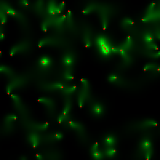
I was searching the net for physics simulations made in Pygame (scouting out the competition) when I found a gravity simulation. The simulation is very straightforward (and hence very good): it starts with some randomly distributed particles, which coalesce due to the force of gravity, often leading to some particles orbiting others. It is basically a simulation of how a cloud of dust can become a sun, or solar system.
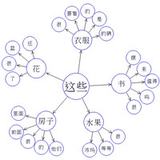
I have just come across an interesting rule for the tones of some words on a Popup Chinese podcast. The rule was only mentioned in passing, perhaps because it only applies to a small number of words. The rule is for when a single character can represent a noun or a related verb, which have the same pronunciation, but a different tone:
The verb is third tone, while the noun is forth tone
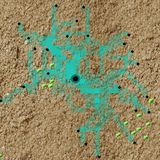
I updated my macrophage simulation to use my Python particle module, which I describe here. I was pleased how straight forward it was to effectively re-create my previous simulation from scratch using a few simple commands. There are a few changes I'd like to make so creating new simulations will be even quicker in future.
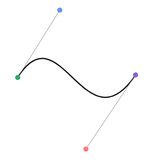
Having made the change from Windows to Linux, I've also had to make the change from Adobe Illustrator to Inkscape. From what I've seen so far, Inkscape seems able to do most of Illustrator can do, plus a bit extra. However, it has taken me some time to make the change and some tasks that should have been simple have turned out not to be. One example is drawing arrowheads on lines and getting them the right colour.
A while ago, Victoria and I came across one of the many pages of silly jokes on the internet. The jokes are similar to the ones you get in Christmas crackers, and I found that I often knew the punchline, or could work it out. Soon we were seeing how many jokes we could guess. I had a clear advantage of being brought up with many of these jokes (and I used to read joke books religiously, cover-to-cover), but after a while, we both seemed to get the knack of predicting punchlines.
On a trip home, a while ago now, I came across a small collection of Tomorrow’s World magazines (this not this horror) from 1998. Inside were several interesting articles and adverts. I particularly interested by those about then cutting edge cameras and phones, which look so dated now. I also found an article that had fascinated me at the time and was about a computer simulation of societies, called Sugarscape.
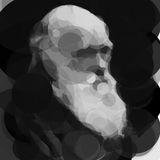
Recently, while searching for an picture of evolution (specifically, the famous image of the progression from ape to man), I came across an interesting and beautiful evolution simulation. The website is actually about a piece of software called Nodebox that uses Python to draw and manipulate images. The site has loads of amazing examples of its power. Sadly, I don’t have a Mac, so I can’t use the software myself. However, since I’ve been learning create SVG files with Python, I thought I create my own simple version.